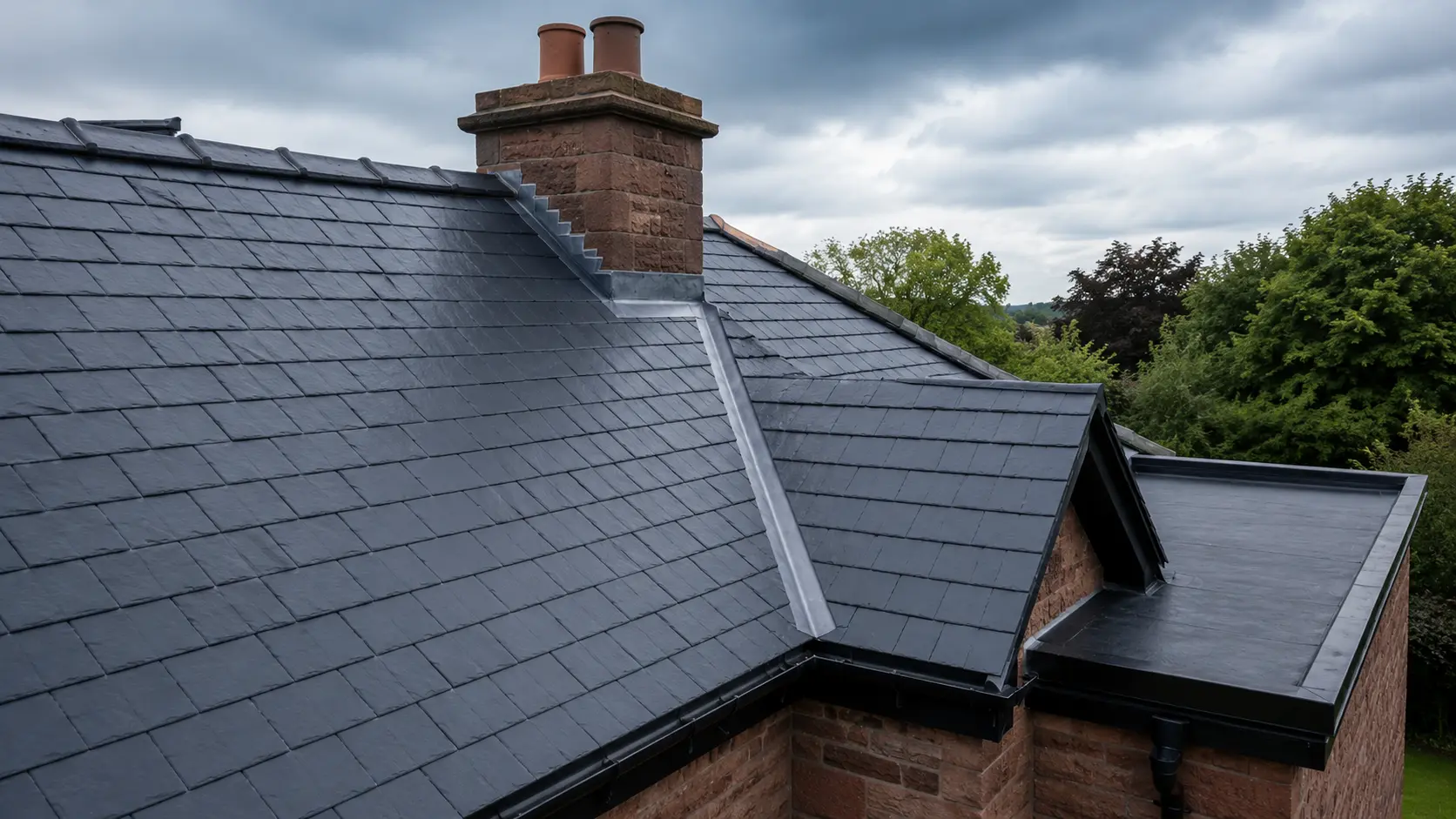
13 years’ roofing experienceSlate, tile and flat roofs
Dumfries and Galloway roofing
Lead Flashing Dumfries
Flashing lifting or letting rain behind it? Say what you have spotted and we will visit to survey the roof, then send you a free quote in writing.
Fully insured: £5m public liabilityNew roofs from £7,500Free no-obligation quote
0800 055 4334Monday–Sunday, 10am–5pm
Finance from £22 a weekSubject to status. Terms apply.
What you can expect
Fully insuredConfidence on every job
Workmanship guaranteeBacked by our guarantee
Free quotesA written scope
Lead flashing repairs
Leadwork for roof junctions and abutments
When damp shows near a wall, chimney or rooflight, the lead is one of the first things to check. It has to move with the roof and still keep rain out of the joint below. More about our work: local roofers in Dumfries.
Depending on the fault, we may repair or replace flashing, abutments, soakers or another lead junction.
On slate and tiled roofs around Dumfries we look closely at how soakers and flashing meet the covering, the stonework and any valley or chimney.
Last updated 17 November 2026
Service overview
Common lead flashing repairs
Where the lead sits, what it meets and how water reaches it decide whether repair or renewal is the better answer.
- Abutment flashingWhere a roof meets a wall, the flashing has to turn water back onto the roof.
- Lead soakersSmall pieces of lead between slates or tiles matter at every junction.
- Split or lifted leadworkAge, movement or a poor joint can spoil the seal at a weak point.
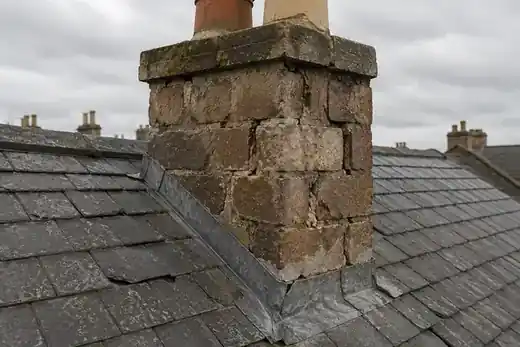
- Chimney flashingWhere the chimney is the main concern we assess the stack and junction together.
- Lead valleysA valley carries concentrated water and needs lining and edges checked together.
What lead flashing does
Why roof junctions need sound leadwork
Lead does the sealing at each place a roof meets a wall or another material. A failed joint lets water run behind the covering, and the damp may show indoors a fair way from the real fault.
We look at the lead and at what it meets, including nearby slate or tile, stonework, rooflights and wall junctions.
- The lead itself, and any split, lift or gap.
- The covering and masonry around the joint.
- Whether water follows a particular kind of weather.
Repair decisions
Lead flashing repair or replacement
A local repair can be enough when the lead and the materials around it are still sound. Replacement is worth considering where the lead is worn, badly formed, failing repeatedly or being pulled by movement.
The right formation and the way it joins the roof are part of any practical specification.
- Where the lead runs and how long it is.
- How good the materials either side are.
- How the joint is reached and what is needed to seal it.
Dumfries and Galloway
Leadwork for Dumfries roofs
Traditional sandstone buildings and chimneyed slate roofs around Dumfries often rely on carefully detailed lead junctions. Later extensions introduce additional wall and roof interfaces.
The amount of leadwork, the detail being formed, masonry condition, surrounding covering and safe access guide the written scope.
Lead that meets stone or a covering needs enough overlap, sound fixings and room to move. Those points steer us towards repair or towards renewal for the longer term.
Questions
Common questions
It seals roof junctions, such as where a roof meets a wall, chimney or rooflight, or where the level changes.
Sometimes, depending on the lead and what surrounds it. The inspection tells us what is appropriate.
A split, a lifted edge, a weak joint, movement or a fault in the materials beside it can all let water behind it.
How much lead is involved, where it runs, the condition of the stone or covering it meets and how easy it is to reach.
Request a quote
Tell us about the roof
Please share what you have seen, the property’s location and the service that fits best.