Finance from £22 a weekSubject to status. Terms apply.
What you can expect
13 years’ roofing experienceSlate, tile and flat roofs
Fully insuredConfidence on every job
Workmanship guaranteeBacked by our guarantee
Free quotesA written scope
Roof leak detection
Finding and tracing a roof leak
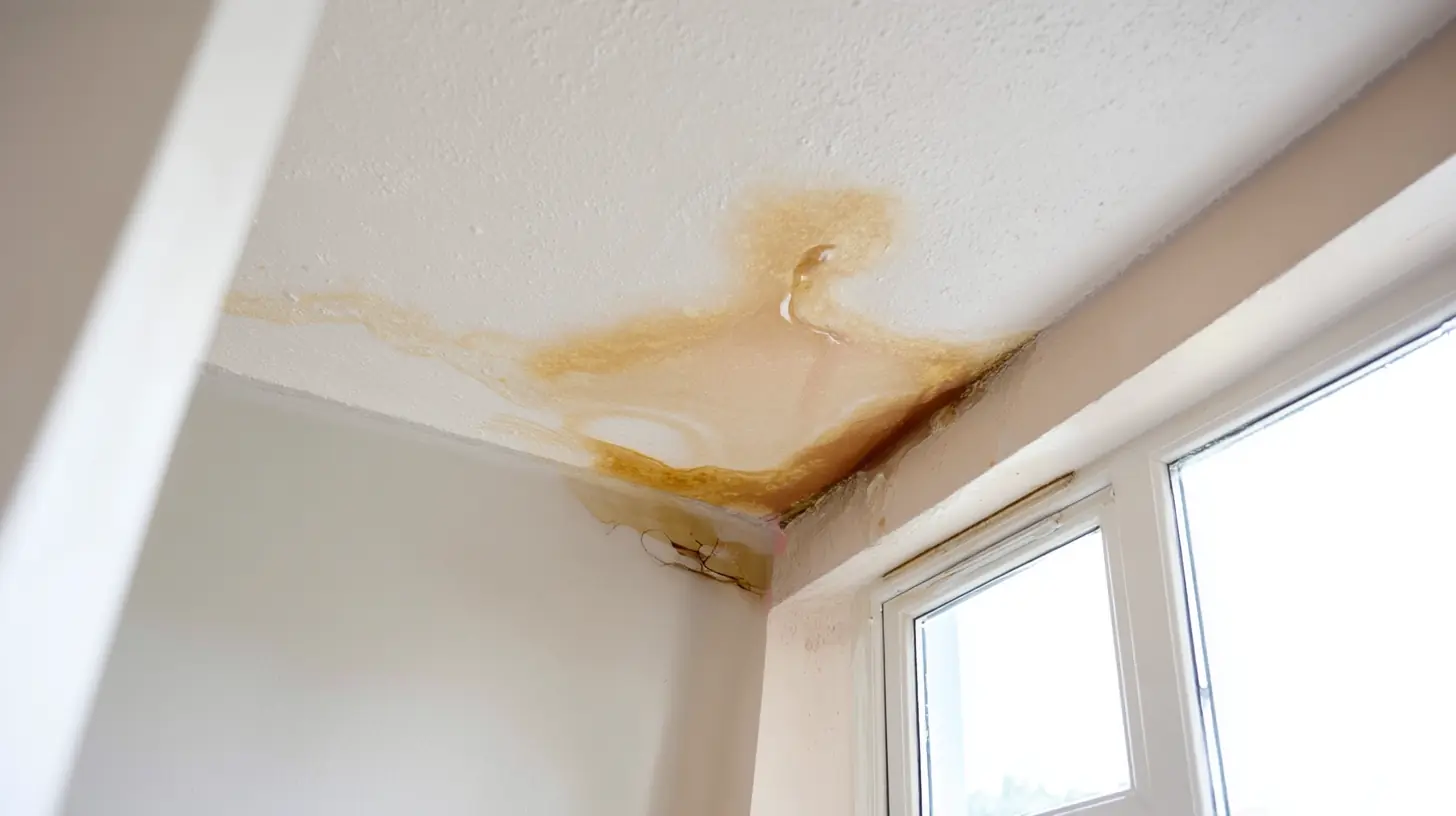
The mark indoors is the symptom, not the cause. More about our work: Dumfries roof repair.
The stain you can see indoors is rarely directly under the fault. Rainwater tends to run along rafters, felt and masonry for some distance, and may only show itself once it reaches a ceiling or wall.
We inspect the roof covering, the details around it and the likely route the water takes, and only then suggest a repair. Fixing the point where water enters matters more than patching the mark in the room below.
Dumfries sits inland from the Solway, and south-westerly weather crossing that open ground can test slates, mortar, leadwork and valley linings on exposed roof surfaces.
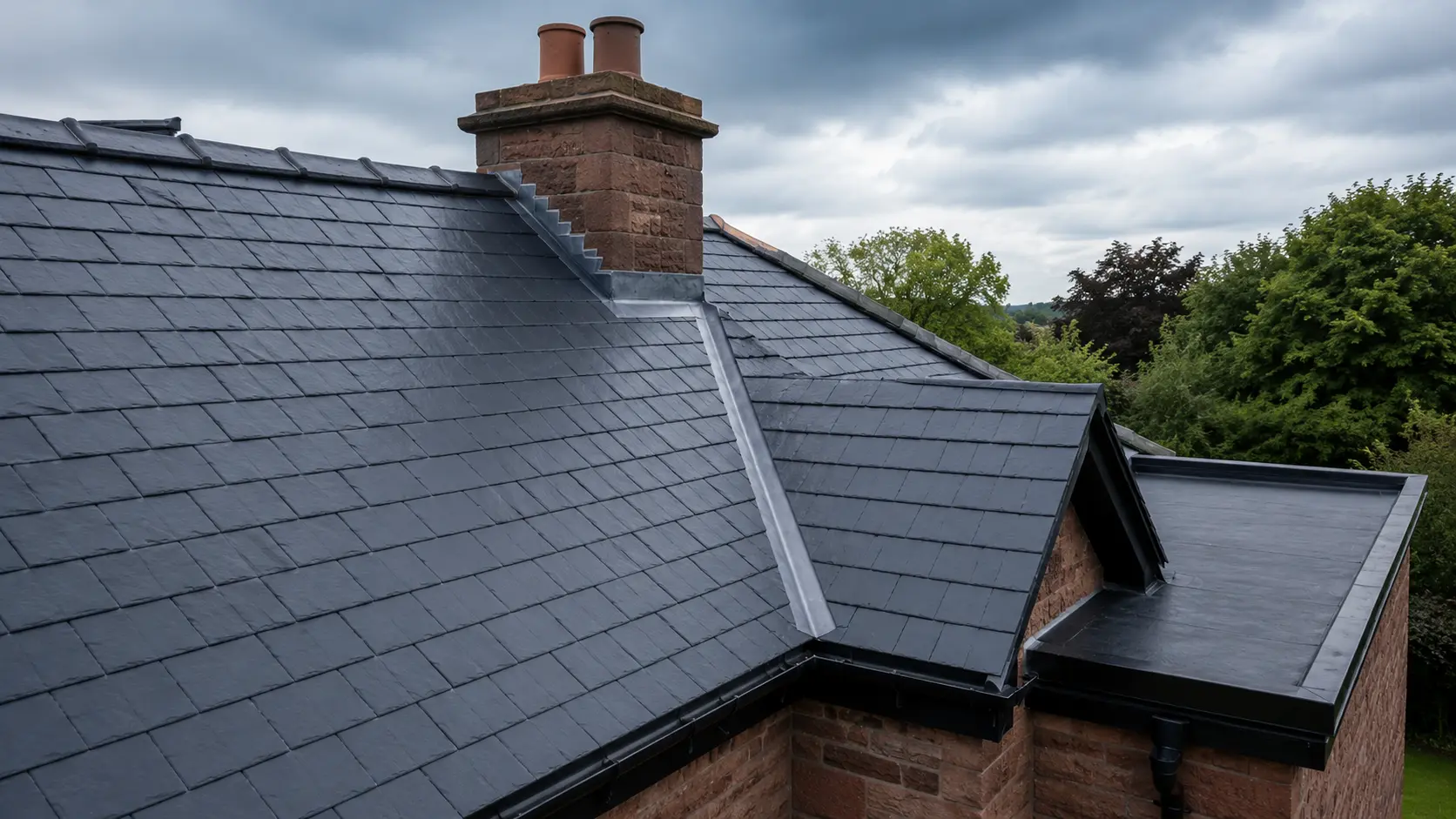
The town centre and surrounding villages include sandstone-built properties with natural slate, chimney stacks and lead details where matching the repair to the existing materials matters as much as locating the entry point.
Follow the water back to where it gets in.
Match the signs inside the house to the roof above.
Agree the repair once the cause is clear.
Last updated 17 November 2026
Possible sources
Common causes of a roof leak
Leaks start in different places on different roofs. A small gap that is left alone can soak insulation, mark ceilings and keep roof timbers damp, so it pays to identify the source before any repair is priced.
Possible leak source
Lead flashing and leadwork
Leadwork seals the joins where a roof meets a chimney, wall, rooflight or a change in height. If it splits, lifts or has too short an overlap, rain can get behind it, which is why we check the whole length and its fixings and not only the spot closest to the stain.
What may be checked
Splits, lifted edges or short overlaps
Loose mortar where lead enters masonry
Water marks after wind-driven rain
Possible leak source
Roof valleys
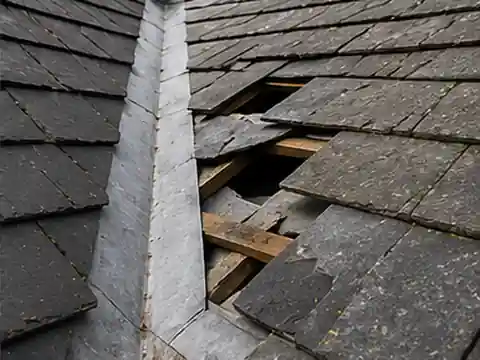
Rain from two roof slopes is gathered into a valley, so it carries a lot of water. A lining that is worn or split, slipped slates beside it or leaves and moss in the channel can send water the wrong way, sometimes only in long spells of rain, so we look at the channel and its edges together.
What may be checked
Splits or holes in the valley lining
Debris restricting the flow of water
Failed edges or displaced nearby coverings
Possible leak source
Chimneys
Flashings, pointing, the flaunching on top and the masonry itself all meet around a chimney, and a fault in any one of them can show up as a leak beside the stack. We assess the stack and the roof around it as one job instead of guessing from the mark indoors.
What may be checked
Loose pointing or porous masonry joints
Split, lifted or poorly dressed leadwork
Problems with the back gutter or the top flaunching
Possible leak source
Slipped slates and damaged tiles
When slates or tiles slip, crack or go missing, the overlapping layer is broken and driven rain can reach what lies beneath. Where this has happened we also look at the battens, fixings and neighbouring slates, since movement often affects more than one.
What may be checked
Slipped, cracked or missing slates
Broken, lifted or displaced tiles
Repeated movement in the same roof area
Possible leak source
Ridge tiles and failed mortar
Old bedding mortar, failed pointing, cracked ridge pieces and wind can all open gaps along the top of the roof. We check for loose material and earlier patch repairs, and for the courses just below the ridge, before deciding what is needed.
What may be checked
Loose, cracked or displaced ridge tiles
Open joints or missing bedding mortar
Previous patching that has separated
Possible leak source
Flat roofs
A flat roof relies on an unbroken waterproof layer and water that drains away freely. Open joints, splits, damaged edges, rooflight upstands or blocked outlets let water in, and standing water puts extra strain on any weak point. We therefore look at the surface, the edges and the drainage as a whole.
What may be checked
Blisters, splits or lifting joints in the membrane
Faults around edges, upstands or rooflights
Blocked outlets or persistent standing water
How we investigate
How we find the source of a roof leak
Our first step is to listen to the pattern: where the water appears, when it happens, and whether strong wind or long rain makes it worse.
From there we follow the likely routes of water over the covering and its details. The part of the roof right above the stain can look perfectly sound while the fault is higher up or to one side.
When the cause is clear, the written quotation names the detail affected, the materials and the work involved.
Interior signs
Water stains, damp patches and ceiling leaks
Brown or yellow marks on a ceiling, damp patches, flaking paint, drips in wet weather or a musty smell usually mean moisture is getting in somewhere.
Make a note of where and when it appears, but do not take it that the fault is straight above.
Water often travels along timbers and under the covering before it turns up in a room.
Whether marks or drips follow rainfall.
Whether the damp patch is spreading.
Anything on the roof you can see from the ground without climbing.
Rooflights, vents and roof space moisture
Leaks around rooflights, vents and a soil pipe
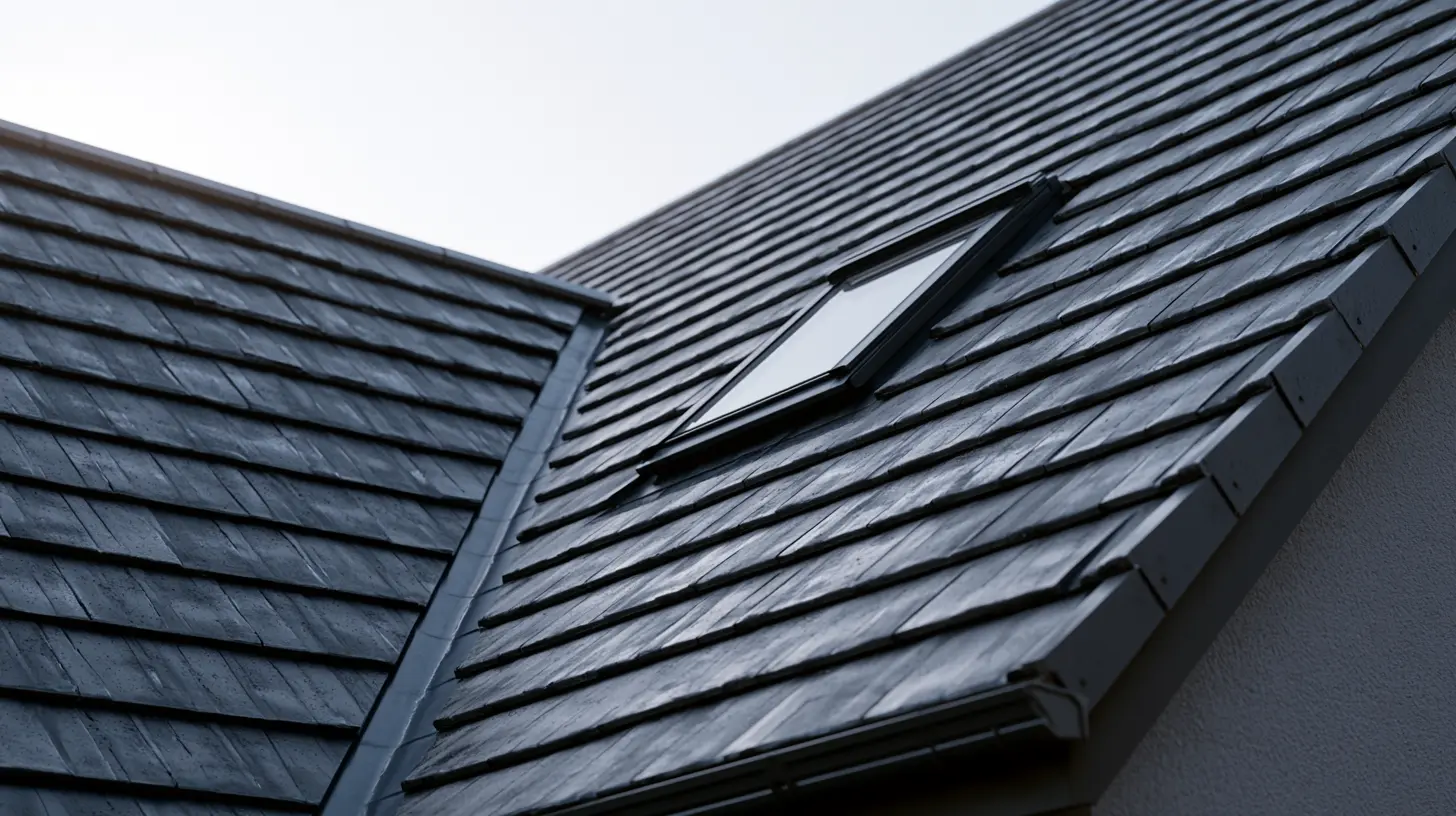
Anywhere a rooflight, vent or soil pipe passes through the roof, the covering is broken and has to be sealed.
The flashings and seals around them must guide rainwater back over the surface and not let it run underneath.
Damp in the loft can also come from condensation rather than from rain getting in.
Condensation tends to follow ventilation and humidity problems, whereas a leak usually appears after rain or in certain winds.
Questions
Common questions
Water can get in at several points: a slate or tile, a valley, flashing, a chimney, a rooflight, a vent or a flat roof joint. It often travels some way before it is seen indoors.
Stay off the roof. If it is safe to, move belongings out of the way, put a bucket under any drips and note when it happens. Then get in touch Monday to Sunday and we will talk through an inspection.
The cause, the type of roof and materials, any hidden damage and how easy the access is will all affect the written quotation.
Condensation can leave a roof space damp, but it normally behaves differently from rain getting through. Noting when and where the damp shows helps us judge which it is.
Request a quote
Tell us about the leak
Describe where the water appears and when, and give us the property address.