13 years’ roofing experienceSlate, tile and flat roofs
Dumfries and Galloway roofing
Roof Valley Repairs Dumfries
Water running the wrong way down a valley? Tell us what you have noticed and we will visit to survey the roof, then send you a free quote in writing.
Fully insured: £5m public liabilityNew roofs from £7,500Free no-obligation quote
0800 055 4334Monday–Sunday, 10am–5pm
Finance from £22 a weekSubject to status. Terms apply.
What you can expect
Fully insuredConfidence on every job
Workmanship guaranteeBacked by our guarantee
Free quotesA written scope
Roof valley repairs
Roof valleys, valley leaks and lining repairs
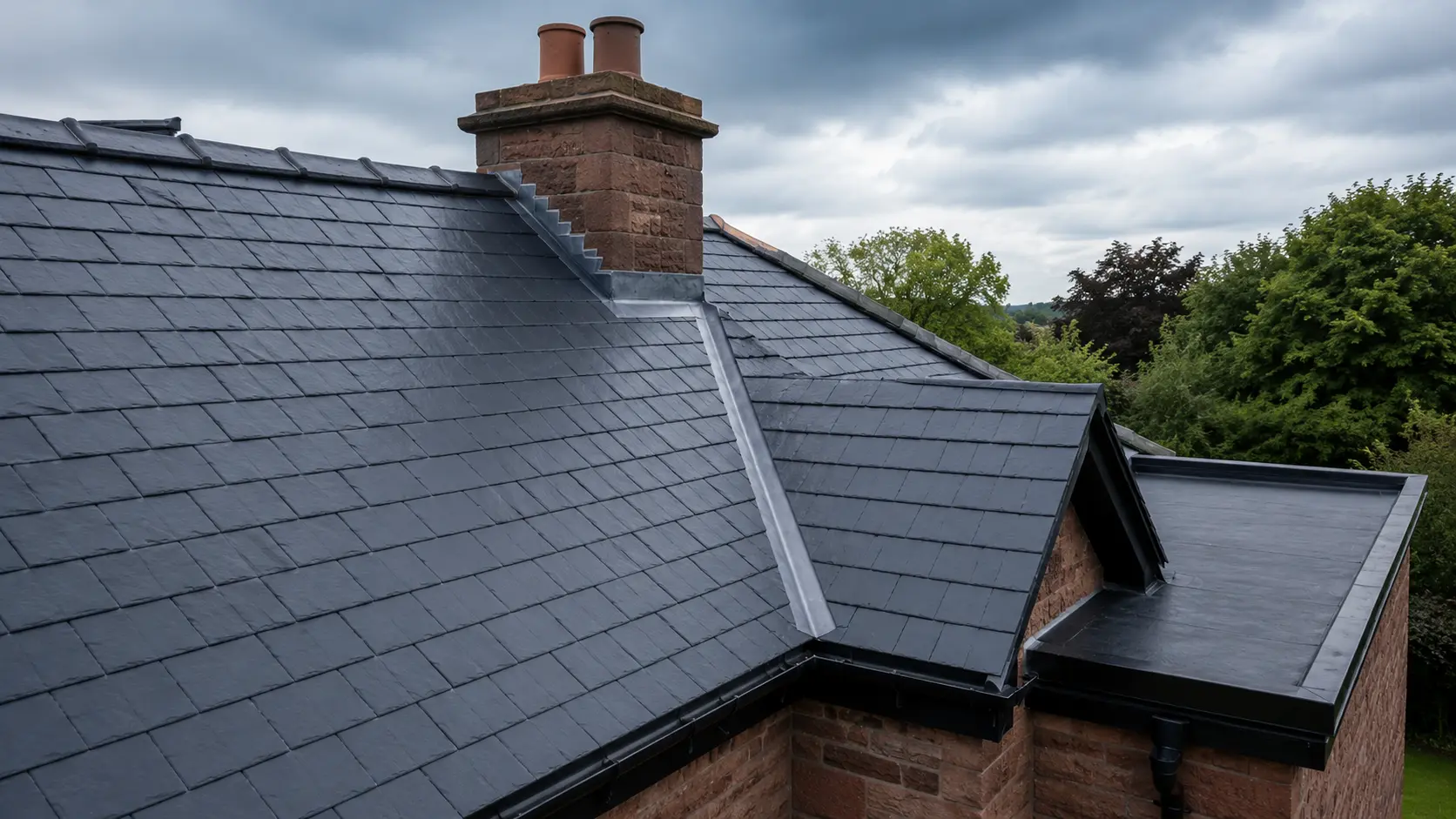
Two slopes of rain run into every valley, so a great deal of water passes along one narrow channel. A thin lining, a failed edge or a slipped slate or tile beside it can soon show up as a leak. More about our work: Dumfries roofing.
We follow the channel and its edges first, then decide between a local repair, a new lining, edge pointing or work on the slates or tiles around it.
The lining, usually lead or another metal, also has to suit the covering beside it, the pitch of the roof and the volume of water it takes.
Last updated 17 November 2026
Service overview
Common roof valley problems
A valley is a channel for water, so the lining, the edges and the materials feeding it are looked at as one.
- Worn or damaged valley liningA lining can take a lot of punishment through a long wet spell.
- Lead valleysLead is one possible material and has to be formed properly for the roof.
- Failed valley pointingOpen mortar along the edge can let in water and change how it runs.
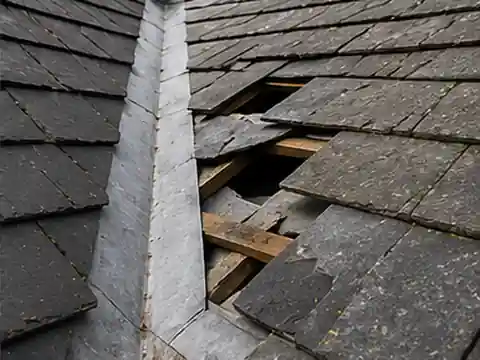
- Damaged slates or tiles beside the valleyTrouble where the covering meets the channel can steer water the wrong way.
- Debris and restricted flowLeaves and moss slow the water and add strain to a weak spot.
Valley types
What a roof valley does
Depending on the roof, a valley may be lined in lead, another metal or GRP. It collects water from two slopes, so overlaps, edges and the condition of the covering beside it all count.
Our inspection follows the channel and what drains into it, rather than looking at a single mark.
- The lining material and how it has aged.
- The slates or tiles along the valley edges.
- Flow of water, leaves or moss, and signs of a leak underneath.
Repair scope
Why roof valleys leak and how they are repaired
A valley can leak through a worn lining, a broken edge, displaced covering, poor pointing or a fault out of sight below. How we repair it depends on the cause and the length affected.
Lead work elsewhere and general leak tracing each have their own pages where the valley is not the main problem.
For more detail, see Lead flashing and leadwork.
- How long the valley is, what it is made of and the pitch.
- How sound the surrounding materials are.
- How the valley is reached, plus any repair needed under the covering.
Dumfries and Galloway
Roof valleys on Dumfries homes
Regular rain makes free-flowing valleys important on intersecting Dumfries roof forms, especially where trees or adjoining slopes feed debris into the channel.
Valley material, length, roof pitch, surrounding slate or tile and the condition of the supporting layers determine the work.
We trace the full water path, taking in the lining, open joints, edge pointing, the underlay nearby and any slate or tile that could be feeding water under the covering.
Questions
Common questions
Usually a worn lining, a failed edge, damaged slates or tiles alongside, poor pointing or blocked flow.
It is the channel where two roof slopes meet, formed in lead to carry water away.
It can be renewed where suitable, though we check the lining and the covering at the same time.
The valley's length and material, the state of the covering beside it, the roof pitch and access, plus any damage found beneath.
Request a quote
Tell us about the roof
Please share the problem you have spotted, where you are and which service seems closest.