13 years’ roofing experienceSlate, tile and flat roofs
Dumfries and Galloway roofing
Slate Roofing Dumfries
Slates sliding out of place or splitting? Tell us what you can see and we will visit to survey the roof, then send you a free quote in writing.
Fully insured: £5m public liabilityNew roofs from £7,500Free no-obligation quote
0800 055 4334Monday–Sunday, 10am–5pm
Finance from £22 a weekSubject to status. Terms apply.
What you can expect
Fully insuredConfidence on every job
Workmanship guaranteeBacked by our guarantee
Free quotesA written scope
Slate roof repair and replacement
Slate roofing for repair, renewal and replacement
One slipped slate or a covering that is wearing out calls for a different answer, and the right one depends on the slate, how it is fixed, the courses beside it and the details around it. More about our work: Dumfries roof repair options.
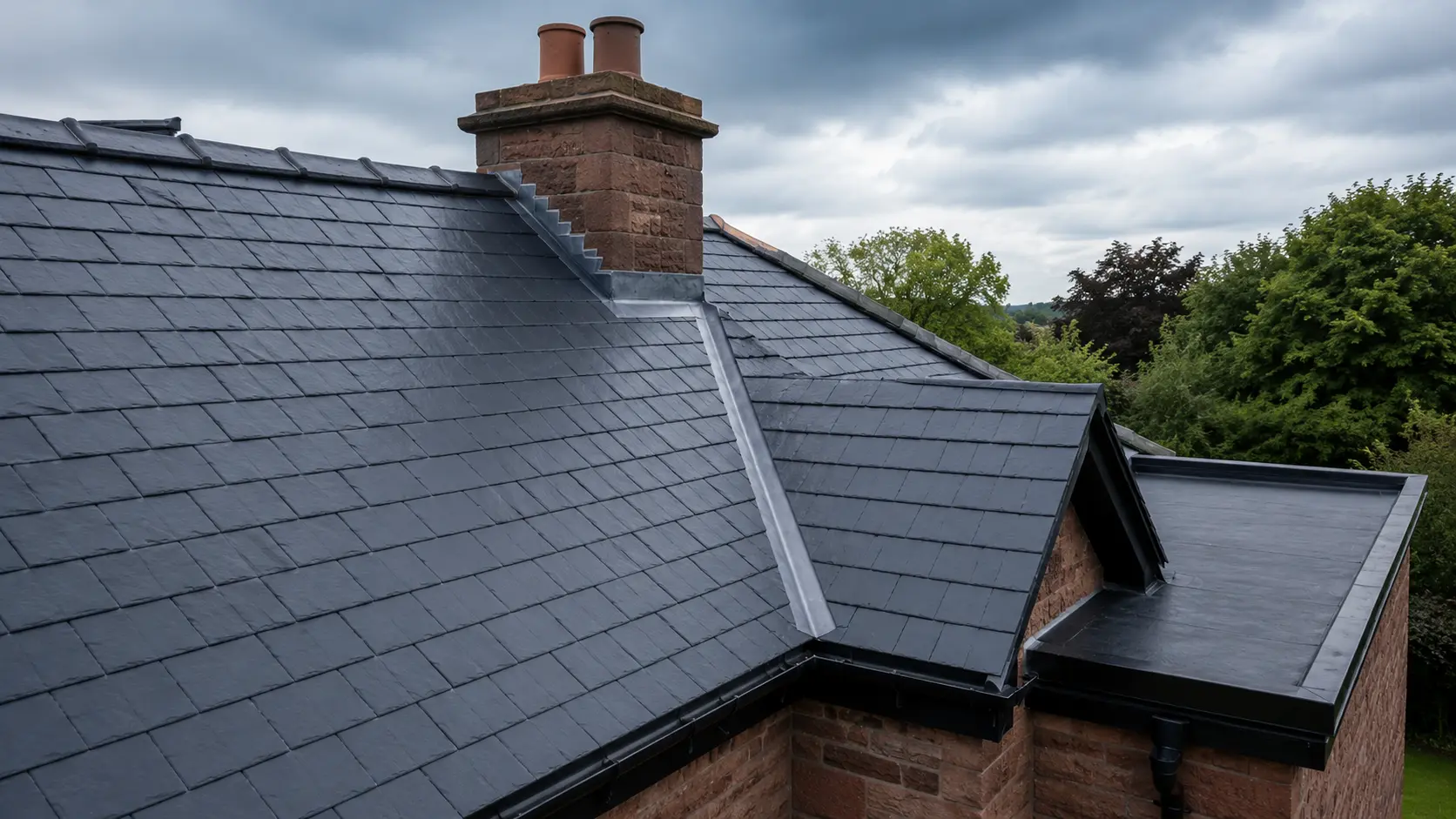
Many older Dumfries buildings pair natural slate with chimney stacks and lead. We see how those parts work together before choosing a targeted repair or wider replacement.
It also helps us match the right natural slate, whether Scottish, Spanish or another, as size, thickness and how it is fixed count for as much as colour.
Last updated 17 November 2026
Service overview
Common slate roofing work
Here are the slate repairs, replacements and choices of material that come up most on roofs around Dumfries.
Slipped or broken slates
Slates that have slipped or broken can leave the layers beneath open and may point to worn fixings.
Key points
- Replace damaged slates.
- Check failing fixings.
- Inspect courses nearby.
Slate replacement
Replacement runs from a targeted repair to a whole new slate covering where decay is widespread.
Key points
- Match suitable slates.
- Assess underlay and battens.
- Plan partial or full renewal.
Scottish, Spanish and natural slate
Origin, look, size and durability of the slate should suit the property, the pitch and the exposure.
Key points
- Compare colour and texture.
- Check size and thickness.
- Choose suitable fixings.
Repair work
How slate roof repairs are assessed
A targeted repair looks at the failed slate and the course beside it, and also at the fixings, the layers beneath and any valley, flashing or ridge nearby.
We want to know why the slate moved or broke before we set out the repair.
- The slate and how it is fixed.
- How the courses beside it and the roof details are standing up.
- Any sign that the problem has spread below the covering.
Replacement planning
Planning a slate roof replacement
When replacement is planned, the scope draws on the pitch, underlay or sarking, battens, fixings, valleys, flashings and access, and the slate chosen should suit the building and how exposed it is.
If decay runs across the whole roof, replacement may be more practical than going on with isolated repairs.
For more detail, see New roofs and roof replacement.
- Slate type and fixing approach.
- The structure and layers under the covering.
- Lead, valleys, ridges and other details alongside.
Dumfries and Galloway
Slate roofing for Dumfries homes
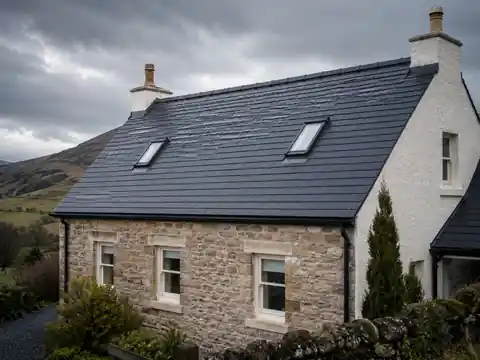
Council design guidance identifies slate as the region's predominant traditional roofing material, while Dumfries listed-building records repeatedly note grey or grey-green slate with sandstone and chimney stacks.
Slate type, matching, fixing method, roof pitch, supporting layers, lead junctions and access determine the specification.
Getting a natural slate to match takes more than colour. Its size, thickness, where it comes from, how it is fixed and the state of the sarking or battens decide whether a repair sits firmly in the roof as it stands.
Questions
Common questions
Often, where the roof around it is still sound, though the fixings, nearby courses and adjoining details should be checked too.
That depends on the existing roof, the look wanted, the fixing method, the pitch and how exposed the building is.
Yes. A planned replacement covers the slate, the layers beneath and the details that keep the finished roof weathertight.
The type of slate, the area involved, the fixings and layers beneath, the junction details and access all feed into the quotation.
Request a quote
Tell us about the roof
Just say the problem you have spotted, where you are and which service seems closest.